Company News
Viewing:
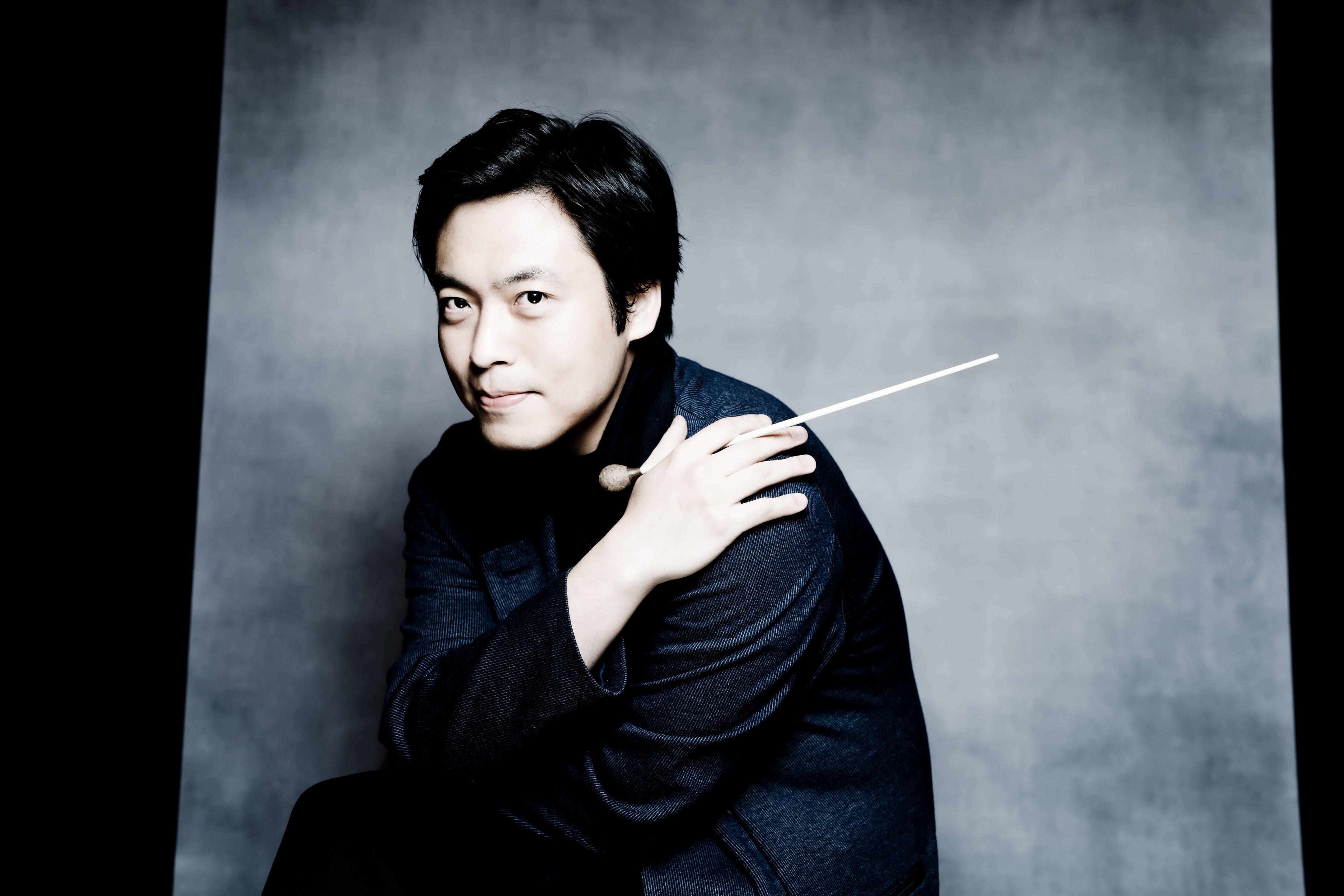
Joining together with many across the arts industry, the #OneVoiceCampaign is exploring ways to save the arts in the UK and support freelancers. The initiative is driven by tenor Andrew Staples and conductor Sam Evans.
The campaign engages with individuals and organisations across the performing arts sector and the UK Government, with an economic view that the best way to serve the needs of freelanders, venues, promotors, professionals, and audiences is to safely and sustainably re-open the cultural sector now. Their "Seat Out To Help Out" proposal seeks ways to stimulate not only the arts economy but those of adjoining sectors: dining, tourism, transportation, and more.
With social distancing, venues are not able to bring in more than 30% revenue at the box office. The One Voice Campaign has offered a case for a seat-matching, safe-opening Government stimulus plan that would allow venues to raise this figure to 60%. Ultimately, they seek to "promote collaboration across the sector to safeguard the performing arts for future generations."
Sir Simon Rattle has stepped in to say that “we are an immensely interconnected industry, so it is important that these funds percolate from the grassroots up, so that the whole landscape can be nourished... individual artists have been staring into the abyss.”
You can read the #OneVoiceCampaign's seat-matching position paper here:
An opportunity exists to kickstart the return of the Performing Arts Sector. The reduced capacity resulting from a socially distanced audience means that box-office takings can currently only reach an average maximum of 30% of their normal figure. A Government backed scheme to match tickets sold at the box-office, taking venues’ potential revenue to 60%, would restart the Cultural Economy, provide work for freelancers and arts professionals, as well as restore the various multiplier effects to associated local and national economies. 1
The cost of not doing this would be considerable. Unless the impact of social distancing on venues is addressed, Arts organisations will not be in a position to open economically and will face little choice but to close and wait for the Social Distancing policy to change. The lead time for them to restore activities will be large, and many organisations may not survive such a lengthy hibernation. Should the Sector be encouraged by circumstance to enter long-term hibernation, the cost of restarting and restructuring down the line will be much larger than the cost of sustaining operations now. The loss of talent, expertise, and the absence of ongoing economic multiplier effects will be more costly to the UK Economy.
Audience confidence to return to venues under Stage 4 Social Distancing is healthy (66%), as demonstrated by research from Indigo Ltd. As long as audience appetite to return to venues exceeds allowed capacity, we do not require a stimulus package by way of an incentive. We do, however, require a means to open the venues economically to allow for any work to be done.
Venues are becoming increasingly worried that they may be advised to open beyond a safe capacity in order to meet financial needs.
We estimate that the cost of a Safe-Opening Stimulus scheme (from Oct 2020 - April 2021) to be in the region of £500m.2
Obstacles
Acknowledgement of Obstacles
The case for a Safe-Opening Stimulus
In Summary
Costings
1. Theatre cost breakdown:
In 2018, 18.6m tickets were sold at UK Theatres at an average price of £27.17, resulting in a total box office revenue of £509m. The average capacity achieved was 60%. (Source: UK Theatre Sales Data 2018)
30% capacity for 6 months at an average price of £27.17 equates to £127.4m. If tickets were priced at £25, this figure would be £117.2m.
This UKTheatre analysis reflects over 200 of the “better resourced” theatres in the UK. Theatre Trust estimate there to be 1100 theatres in the UK. Because the remaining Theatres in the UK do not represent an equivalent level of production, their costs do not scale linearly. We estimate the cost of the remaining theatres to be more akin to double the UK Theatre/SOLT numbers - but more investigation is needed to justify this supposition.
If this proves to be the case, the estimated cost to the scheme to maintain operations of UK theatres (except SOLT) for a 6 month period, would be in the region of £234.4m
Based on an estimated average capacity of 1200 for SOLT theatres, the same calculation gives the cost to the scheme of sustain all SOLT theatres at 30% for 8 shows a week for 6 months with tickets at £25 to be £82.5m
To buy 30% of the tickets for all UK Theatres at a fixed price of £25 for 6 months would cost the scheme an estimated £316.9m.
Music cost breakdown:
PRS data shows that in 2019 total box-office from live music events was £1.02bn
30% of which (£306m) over a 6 month period would equate to £153m.
Between these two broad categories, we estimate that data for opera, ballet, dance and other performing arts are accounted for. The total cost to match 30% box office revenue for the UK Performing Arts Sector, for a 6 month period, at a fixed price of £25, would be an estimated £469.9m.
2. Multiplier effects:
(Source: Contribution of the Arts and Culture Industry to the UK economy
Report for Arts Council England by Cebr.
April 2019)
1. The gross domestic output of the entire Arts and Culture industry is estimated at £21.2bn in 2016.
UK arts and culture industry generated an aggregate turnover of £12.4 billion in 2011. (ACE evidence review “The Value of Arts and Culture to people and society” 2016). The Office for National Statistics confirms that the arts and entertainment sector has been badly hit by the COVID-19 crisis. 25 percent of businesses are not trading at all; 41 percent have seen their turnover fall by half. Reserves are going or gone.
2. See supporting notes for costing
3. This plan is bourne of collaboration with: The Unions (BECTU, MU, ISM, Equity), UKTheatre/SOLT, MPA, CPA, The London Consortium of Theatres, MVT, ABO, BACH, WiseGroup, NCA, and a host of theatres and concert venues including the Barbican, Derby Theatre, Snape Maltings, Opera Holland Park and the Roundhouse.
4. “Eat out to help out” cost £500m for a targeted stimulus over 12 days in the month of August 2020. It worked.
5. UKTheatre/SOLT report that average capacity achieved over the last decade has held at the 60% level.
6. Indigo Ltd survey of audiences 66% confidence / Snape survey of its current audience 98% confidence. (Snape being one of the few venues open and mounting a programme of socially distanced events)
7. See supporting notes (2).
8. UK film insurance underwriting model as part of the Government’s ‘Jump Start’ film industry announcement 28 July 2020.
9. “Those who had attended a cultural place or event in the previous 12 months were almost 60 per cent more likely to report good health compared to those who had not, and theatre-goers were almost 25 per cent more likely to report good health.” Source: ACE The Value of Arts and Culture to people and society (2016)
10. PM statement on reviewing SD, although it has been hinted in the Press on September 6th that this policy may be reconsidered earlier than that.
11. Since 2013 the average annual capacity of UKTheatre/SOLT member venues has been 59%-61%
12. “performing arts and artistic creation are the largest contributors to the industry’s aggregate turnover performance – an estimated £5.9 billion of gross value added (GVA) to the UK economy.” Source: ACE The Value of Arts and Culture to people and society (2016)
13. “These intrinsic effects enrich individual lives, but they also have a public spillover component in that they cultivate the kinds of citizens desired in a pluralistic society. These are the social bonds created among individuals when they share their arts experiences through reflection and discourse, and the expression of common values and community identity through artworks commemorating events significant to a nation’s (or people’s) experience.” (McCarthy et al, 2004, The Gifts of the Muse: Reframing the Debate about the Value of the Arts)
14. Freelancers Make Theatre Work study: Freelancers constitute 86% of all people of colour employed by NPOs. “There is an immediate risk that we are about to lose a generation of unique promise that was to power the next phase of our financial and creative growth and to bring us closer to ensuring that “this country’s diversity is fully reflected in the culture it produces”. (Let’s Create, Arts Council England Strategy 2020 - 2030)