JessDandy
- Contralto
- Mezzo-Soprano

About Jess
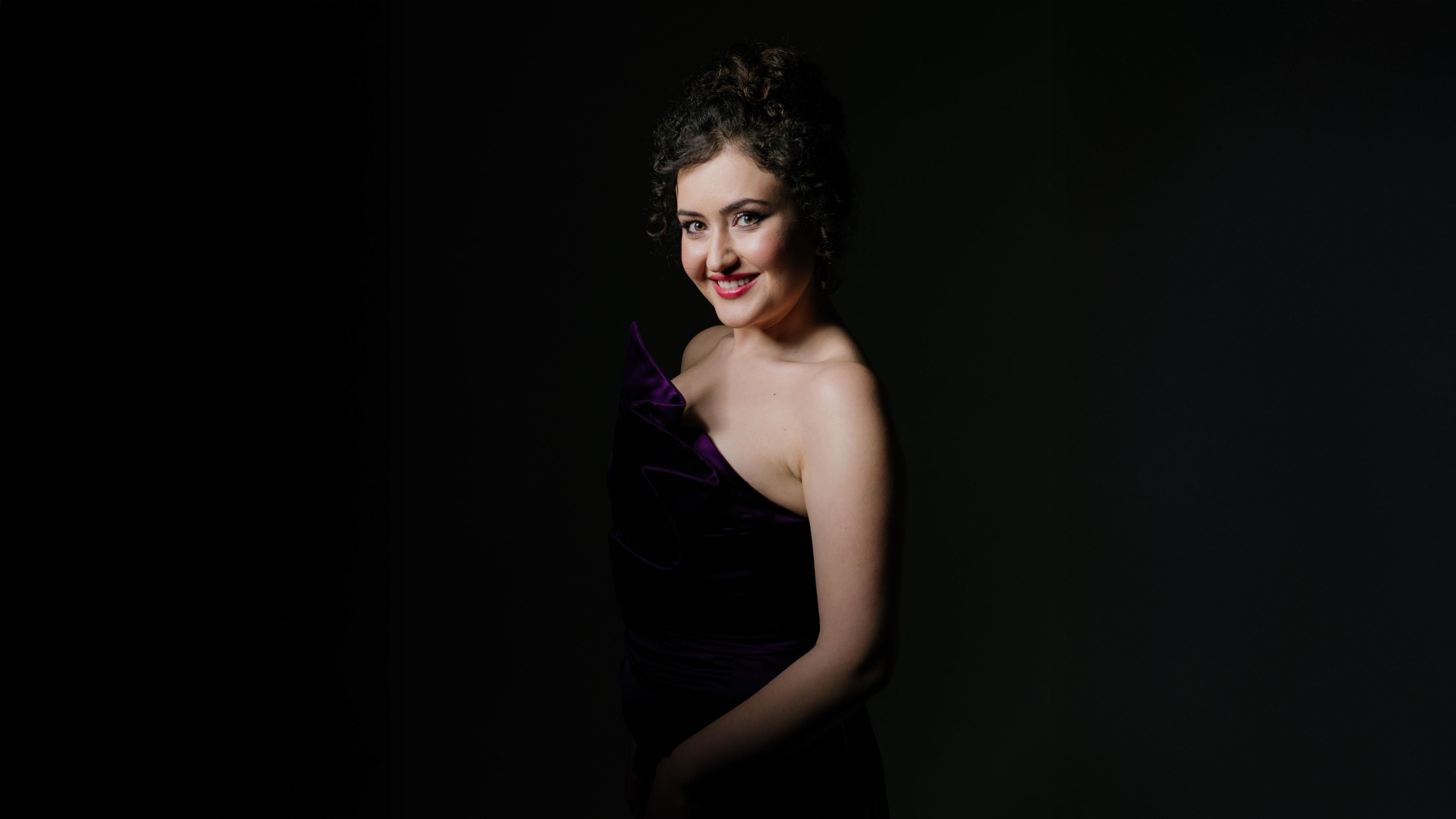
Cumbrian-born Jess Dandy is widely regarded as the foremost British contralto of her generation. Winner of the 2025 Critics’ Circle Award for Female Voice, she studied Modern and Medieval Languages at Trinity College, Cambridge, graduating with Special Excellence, before training at the Guildhall School of Music & Drama, where she graduated with distinction and was subsequently awarded a fellowship.
The 2026/27 season sees Jess make her Royal Ballet and Opera debut as Dritte Dame in Mozart’s Die Zauberflöte, with David Bates and Dalia Stasevska. Her concert engagements include first appearances with the Hong Kong Philharmonic in a Beethoven celebration featuring Symphony No. 9 and Missa Solemnis, led by James Sherlock; Mahler’s Symphony No. 2 with the Hamburg Philharmonic under Anja Bihlmaier; and Elgar’s The Dream of Gerontius with the Danish National Symphony Orchestra and Vasily Petrenko. She also returns to the BBC Philharmonic for Beethoven’s Symphony No. 9, the Royal Liverpool Philharmonic Orchestra for its Spirit of Christmas concerts and Ensemble 10:10 project under Tess Jackson, and the City of Birmingham Symphony Orchestra for Mahler’s Symphony No. 2 with Kazuki Yamada. Further engagements include BBC National Orchestra of Wales and Jörg Widmann in his Cantata in tempore belli, and Bach’s St Matthew Passion with the National Symphony Orchestra of Ireland.
Recent operatic highlights include her Salzburg Easter Festival debut as Floßhilde in Das Rheingold with the Berliner Philharmoniker under Kirill Petrenko, her Bayerische Staatsoper debut as Lady Toodle in Hans Werner Henze’s Die Englische Katze conducted by Katharina Wincor and her house and role debut as Cornelia in Giulio Cesare at The Grange Festival under Christian Curnyn. On the concert platform, recent highlights include appearances at the BBC Proms in Stravinsky’s Requiem Canticles, alongside performances with the Bergen Philharmonic Orchestra under Sir Mark Elder, Tampere Philharmonic Orchestra with Matthew Halls, BBC Symphony Orchestra under Kristian Sallinen, Irish Baroque Orchestra and Peter Whelan, Royal Philharmonic Orchestra with Andrew Hanze and Boston Symphony Orchestra under Ludovic Morlot.
An accomplished recitalist, recent highlights include her return to Kings Place and Oxford International Song Festival for her concert-meditation Eternity in an Hour with pianist Keval Shah, a recital at Wigmore Hall with Dylan Perez and the Barber Institute of Fine Arts, Birmingham for a recital with Ceri Owen. She has also recorded Schubert’s Winterreise with Martin Roscoe, to be released in 2028.
In 2021, Jess was shortlisted for a Royal Philharmonic Society Award. She is a multi-faceted artist with a keen interest in ecology, body psychology and spirituality. She is the co-founder of SongPath, a mental health initiative creating musical walking trails in nature for better mental health. As an artist in residence at Brantwood, Cumbria, she is creating a chapel for ecological consciousness through recorded sound, spoken word & photography (Clare Park), which opened this summer.
Contact
For availability and general enquiries:

Rowan Bidmead
For contracts, logistics and press:

Grace Hewett
Representation
Worldwide general management with Askonas Holt
Media
- Playing
Jess Dandy - "Erbame Dich" from J.S.Bach's St Matthew Passion
Jess Dandy - Contralto | James Orford Credit: Jess Dandy
Jess Dandy - "Rhapsodie für eine Altstimme" J. Brahms
Jess Dandy - Contralto | James Orford Credit: Jess Dandy
Jess Dandy - "Priva son d'ogni conforto (Cornelia)" from G.F.Handel's Guilio Cesare
Credit: Jess Dandy
Jess Dandy - "Softly and Gently (The Angel's Farewell)" from Elgar's The Dream of Gerontius
Jess Dandy - Contralto | James Orford Credit: Jess Dandy


Season Highlights
Selected Repertoire
Antonio Caldara
Caio Marzio Coriolano (title role)
Berlioz
Béatrice et Bénédict (Ursule)
Bizet
Carmen (title role)
Britten
Paul Bunyan Op. 17 (Alto in Quartet of the Defeated Blues) • Peter Grimes (Auntie/Mrs Sedley) • The Rape of Lucretia (Lucretia/Bianca) • Albert Herring (Florence Pike/Nancy/Mrs Herring) • The Little Sweep (Miss Baggott) • Noye’s Fludde (Mrs Noye) • A Midsummer Night’s Dream (Hippolyta) • Death in Venice (German mother/strolling player)
Debussy
Pelléas et Mélisande (Geneviève)
Gluck
Orfeo ed Euridice (Orfeo)
Handel
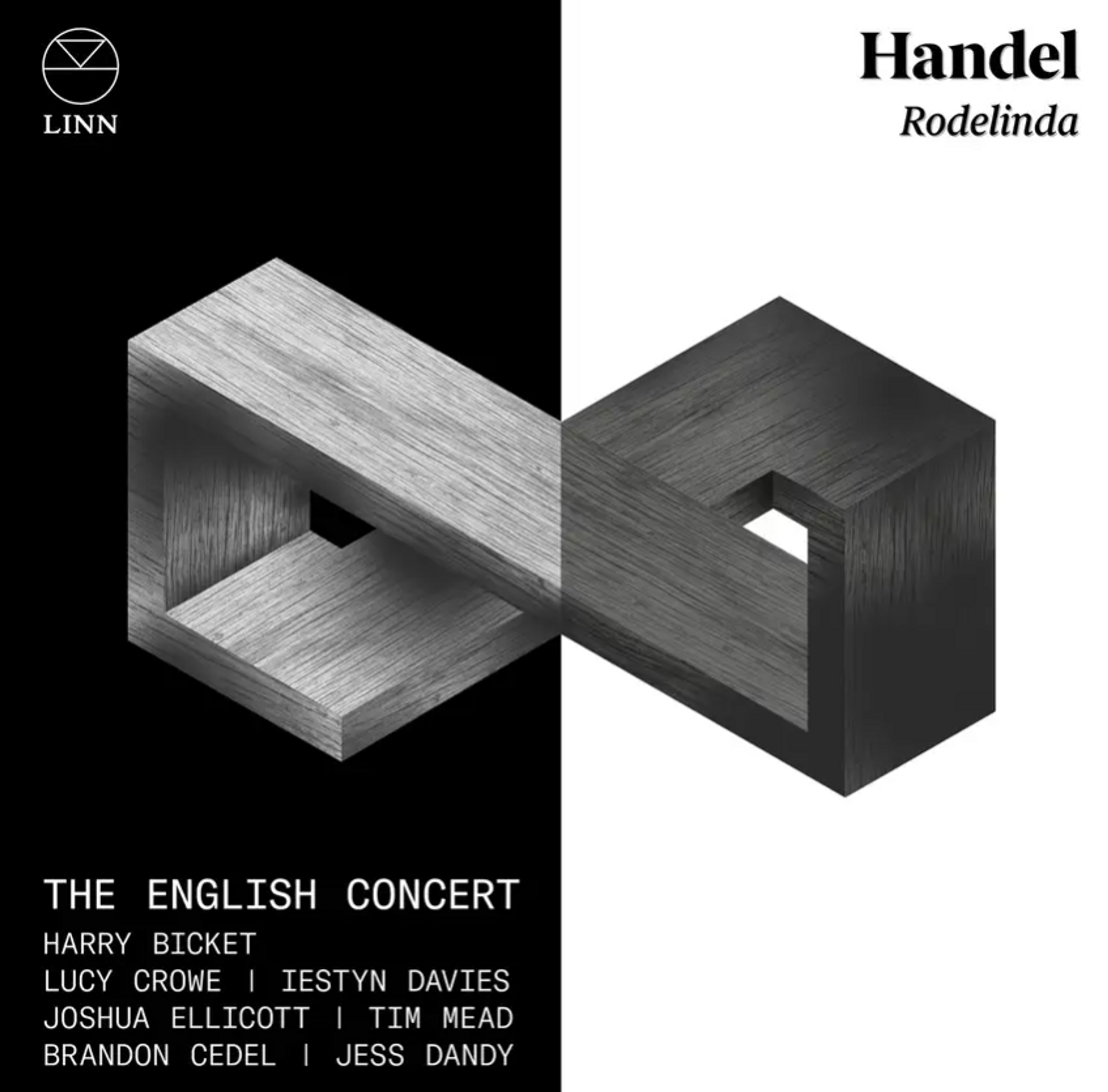
Giulio Cesare (Cornelia) • Alcina (Bradamante) • Rinaldo (title role) • Radamisto (Zenobia) • Floridante (Elmira) • Ottone, re di Germania (Matilda) • Flavio, re de’ Longobardi (Teodata) • Rodelinda (Eduige) • Fernando, Re di Castiglia (Sancio) • Ariodante (Polinesso) • Serse (Amastre)
Hans Werner Henze
English Cat (Lady Toodle)
Humperdinck
Hänsel und Gretel (The Gingerbread Witch)
Janáček
The Diary of One Who Disappeared (Zefka)
Jonathan Dove
The Adventures of Pinocchio (Pigeon/Snail)
Josephine Stephenson
Three Lunar Seas (She) (created the role)
Monteverdi
L’incoronazione di Poppea (Ottavia/Arnalta) • L’Orfeo (La Messaggiera)
Mozart
Die Zauberflöte (Dritte Dame)
Puccini
Suor Angelica (La Zia principessa)
Purcell
Dido and Aeneas (Dido/Sorceress)
Ravel
L’Enfant et les sortilèges (La tasse chinoise/Un pâtre)
Rossini
La Donna del lago (Malcolm)
Shostakovich
Lady Macbeth of Mtsensk Op. 29 (Sonyetka)
Strauss
Ariadne Auf Naxos (Dryade)
Tippett
Midsummer Marriage (Sosotris)
Wagner
Das Rheingold (Erda/Fricka/Floßhilde) • Die Walküre (Fricka/Waltraute/Roßweise) • Götterdämmerung (Waltraute) • Zweite Norn/Floßhilde)
William Walton
The Bear (Popova)
Sample Programmes
Eternity in an Hour
Indian and Western philosophies converse in this recital, in a fusion of cultures, perspectives and soundscapes. Commissioned for this year’s Festival, Indian- American composer Reena Esmail’s settings of Sanskrit verses from the Bhagavad Gita draw out the essence of Vedantic thought, and are interspersed with music from the canon of Lied repertoire, highlighting the ways in which Western and Eastern philosophies converge and diverge. Jess Dandy - contralto Kunal Shah - piano Reena Esmail - composer Benjamin Britten Proverb VII (from Songs and Proverbs of William Blake) Reena Esmail Gayatri Mantra Reena Esmail I Johannes Brahms Verzagen, op.72 no.4 John Dowland In darkness let me dwell Johannes Brahms O wüsst ich doch den Weg zurück, op.63 no.8 Benjamin Britten Batter my heart (from The Holy Sonnets of John Donne) Reena Esmail II Hugo Wolf Alles endet, was entstehet (from Drei Gedichte von Michelangelo) Franz Schubert Auf dem Wasser zu singen, D744 Reena Esmail III Olivier Messiaen Répétition planétaire (from Harawi) Elizabeth Poston Jesus Christ the Apple Tree Reena Esmail IV Franz Schubert Auflösung, D807 Hugo Wolf An die Geliebte Reena Esmail Gayatri Mantra Benjamin Britten Proverb VII (from Songs and Proverbs of William Blake)
In dark times will there be singing?
Jess Dandy (contralto) Dylan Perez (piano) MEDTNER Winter Song Op. 13 No 1 SHOSTAKOVICH Six Poems of Marina Tsvetayeva Op. 143 (1973) CAPLET Les Prières MESSIAEN from Harawi - Chant d’amour et de mort La ville qui dormait, toi Bonjour toi, colombe vert Katchikatchi les étoiles Dans le noir TRAD. Tsvey Taybelech MAHLER Des Knaben Wunderhorn Ablösung im Sommer Urlicht Das himmlische Leben EISLER Spruch 1939 Das Lied vom Anstreicher Hitler Op. 41 No. 3 WEILL Wie lange noch? Aufstieg und Fall der Stadt Mahagonny: Alabama Song GLASS Wichita Vortex Sutra ALEX MILLS The Book of Hours In deep nights I believe in the night I love you, my darkness Encore - WEILL Lost in the Stars
Recital with Martin Roscoe, Fenella Humphreys and Ben Goldscheider
Jess Dandy (contralto) Ben Goldscheider (french horn) Fenella Humphreys (violin) Martin Roscoe (piano) R. Schumann Adagio & Allegro Op. 70 C. Schumann Romances Op. 22 R. Schumann Widmung Op. 25/1 C. Schumann Liebst du um Schönheit Op. 12/2 C. Schumann Am Strande C. Schumann Ich stand in dunklen Träumen Op. 13/1 R. Schumann Stille Tränen Op. 35/10 Brahms Zwei Gesänge Op. 91 Interval C. Schumann Das ist ein Tag, der klingen mag Op. 23/5 R. Schumann Intermezzo Op. 39/2 Waldesgespräch Op. 39/ 3 C. Schumann Lorelei Op. 12 R. Schumann Venetianisches Lied I Op. 25 R. Schumann Requiem Op. 90/7 Brahms Horn Trio Op. 40
News
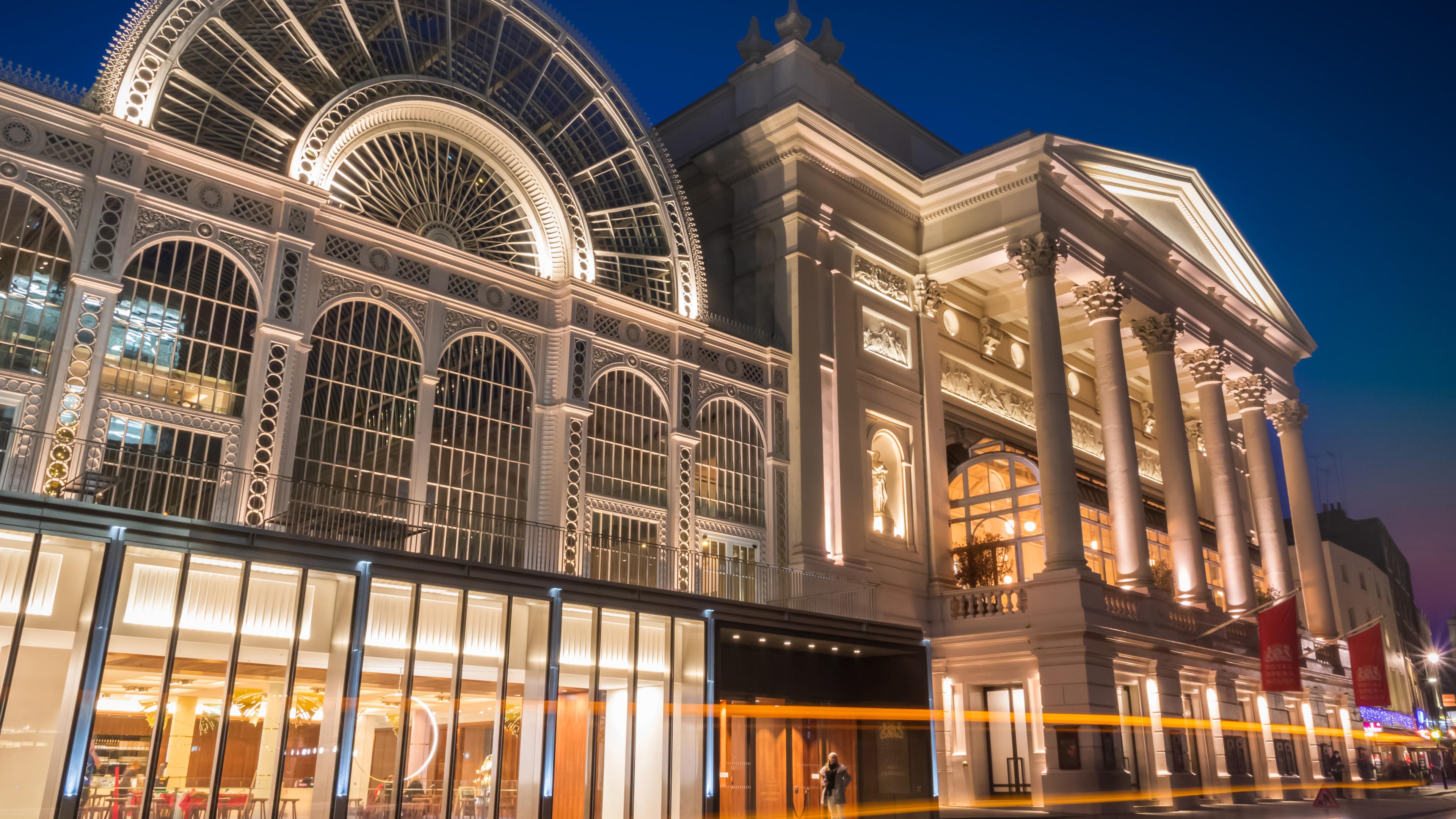
29 Askonas Holt artists to appear at Royal Ballet and Opera in 2026/27 season
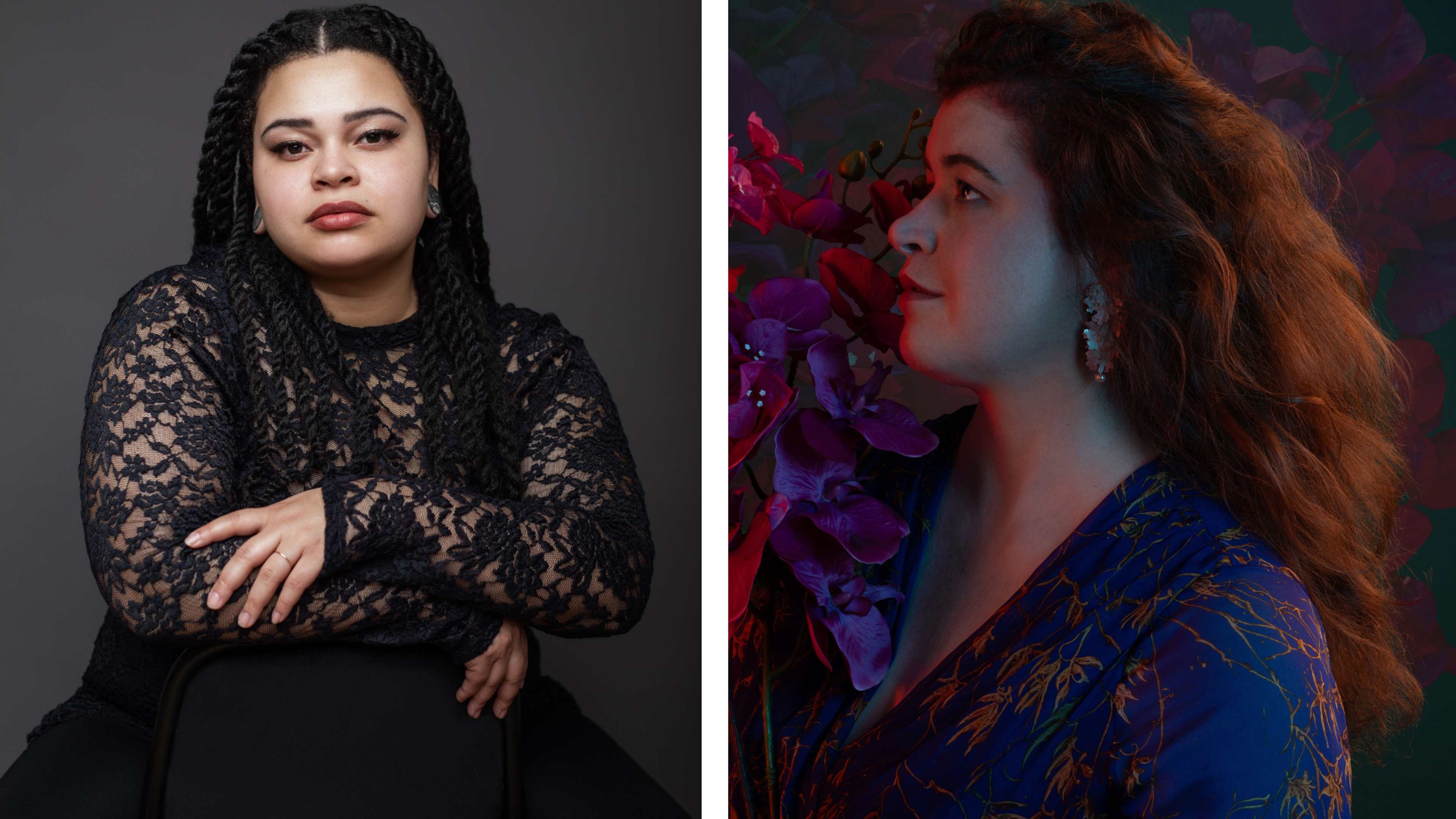
Debuts for Jasmin White and Jess Dandy in Das Rheingold at the Osterfestspiele Salzburg
Jess Dandy makes role debut in Berlioz’ Roméo et Juliette

Askonas Holt sends 26 artists and touring partners to BBC Proms 2025

Bayerische Staatsoper announces new season including performances from 20 Askonas Holt artists

Jess Dandy debuts with Gewandhausorchester in Thomas Adès’ Totentanz conducted by the composer

Askonas Holt artists and touring partners to appear at the 2024 BBC Proms

Askonas Holt welcomes contralto Jess Dandy
Press
Bach | St John Passion
Turner Sims Concert Hall, SouthamptonApr 2025'Von den Stricken' was taken at a lively speed, yet Jess Dandy really conveyed the impression that the words meant something to her. She sang with dark, veiled tone yet with vigour in the passagework and forming a lovely contrast in timbres with the oboes.
- Robert Hugill, Planet Hugill
- 20 April 2025
Brahms and the Schumanns Concert
York UniversityMar 2025The best was certainly kept until last. Jess Dandy is a fine talent and as a true contralto she is a rare bird, one to be carefully nurtured.
- Martin Dreyer, Charles Hutch Press
- 03 April 2025
Solo Recital: "In the dark times will there be singing?"
Wigmore HallJan 2025In Shostakovich’s fitful, fragmented Six Verses for Marina Tsvetayeva, Dandy performed with such depth of tone and feeling she seemed possessed by the dissident Russian poet herself. By contrast, the French composer André Caplet’s settings of three well-known prayers ... reached for the heights, Dandy abandoning herself to their top notes like a saint in ecstasy... Messiaen’s celestial birdsong in selections from his Harawi, in which Dandy’s expertly pitched cries of “toi” (you) made the piano strings sing in sympathy.
- Daniel Lewis, The Times
- 21 January 2025
If portrayal of light, darkness and all the shades in between is your aim, then there is no finer instrument than Dandy's voice for the job, and it was a joy to hear her in a programme that allowed the unveiling of all of its colours: Not content with simple musical dexterity, Dandy demonstrated a sure command of pronunciation in all of the languages (English, French, German, Russian, Yiddish) she sang in; the icing on the talent cake was her taking over tat the piano, while Perez spoke Ginsberg's poetry over the music.
- Barry Creasy, Music OMH
- 21 January 2025
Eternity in an Hour Recital
Oxford Lieder FestivalOct 2024Dandy’s performance of Esmail’s Godsongs was remarkable, not only because the vocal lines and her deeply expressive, richly hued contralto felt perfectly matched, but also because she seemed to embody the music, singing from a profound place. … Esmail’s blend of Indian and western classical styles felt integrated, exploiting the full range of Dandy’s voice, giving us drama and incantation
- Rebecca Franks, The Times
- 16 October 2024
Mozart | Requiem with Tampere Philharmonic
Tampere HallNov 2023Among the quality voices stood out, one possible future star, alto Jess Dandy. Her voice with a refined range and a fateful weightiness.
- Haari Hautala, Aamulehti Newspaper
- 06 November 2023
Handel | Samson with Academy of Ancient Music
BBC Proms, Royal Albert HallAug 2023Dandy impressed with the sober, seriousness that she brought, allied to lovely dark, rich vocal tone including her fine chest register.
- Planet Hugill
- 25 August 2023
...Jess Dandy bringing a rich, strikingly deep contralto to Micah
- Erica Jeal, The Guardian
- 24 August 2023
CPE Bach | Heilig
BBC Proms: Royal Albert HallAug 2023The opening arietta for alto was sung by the peerless contralto Jess Dandy, whose rich tones and wonderfully solid chest voice made for one of the best moments in the concert.
- Barry Creasy, musicOMH
- 06 August 2023
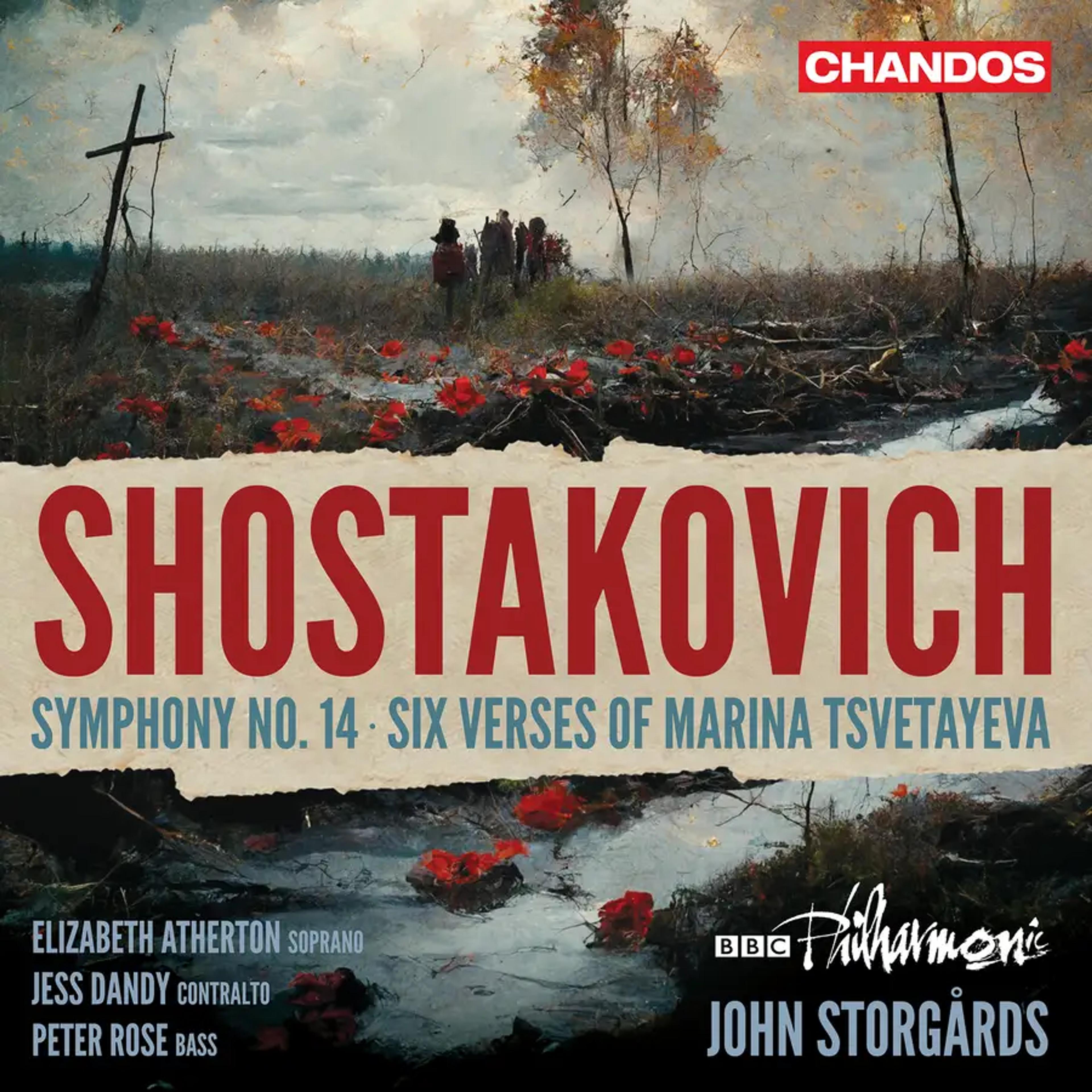
[CD] Shostakovich | Symphony No. 14; Six Verses of Marina Tsvetayeva
Jul 2023Contralto Jess Dandy intuits and discloses the strength at the heart of the Six Poems of Marina Tsevateya, the symphony’s discmate, delivering the most opulent performance of this song cycle since Irina Bogacheva’s (latest reissue on Venezia CDVE00513). Her vocal effulgence in “To Anna Akhmatova” convinces one that, in music at least, hope can thrive in the midst of death – a surprising sentiment from the same composer whose penultimate symphony concluded with Rilke’s verses, “All-powerful is death … [it] awaits for us and thirsts for us—and weeps for us.” Perhaps Shostakovich was also aware of the poet’s more hopeful words to the young Franz Xaver Kappus: “The future stands still, but we move in infinite space.
- Néstor Castiglione, Music Web International
- 07 July 2023
Bach | St Matthew Passion with Dunedin Consort
Queen's Hall, EdinburghApr 2023But the ultimate showstopper was surely alto Jess Dandy’s soul-stirring aria Erbarme dich, sung with melting warmth and impassioned amplitude in liquid partnership with lead violinist Huw Daniel’s exquisite obligato solo.
- Ken Walton, VoxCarnyx
- 06 April 2023
Jess Dandy who lived up to the description in her profile in the programme; her voice was “an instrument of velvety plangent timbre” and it was marvellous, for me the best voice of the night particularly in her aria ‘Erbarme Dich’.
Handel | Messiah with Academy of Ancient Music
Barbican CentreDec 2022Contralto Jess Dandy brought a lovely seriousness and gravity to her performances. Dandy has a richly coloured voice and she clearly relished the opportunities to mine her strong lower register. In the name of colour, she did not hide changes of register but instead used this creatively. Her performances were characterised by a lovely well-modulated, shapely line, often enlivened by bouncing rhythms from the orchestra.
- Robert Hugill, Planet Hugill
- 16 December 2022
Recital with Martin Roscoe
Wigmore HallJul 2022Dandy has quite a distinctively direct, plangent tone quality to her voice, and throughout the recital I was struck by the real sculptural quality to her phrasing... Denn es gehet dem Menschen began dark and sober, serious indeed, though Dandy's intense phrasing was combined with a striking array of colours in her voice whilst the middle section was almost trenchant.... The songs were originally written for bass voice, but Dandy's tone quality and vocal style made the songs seem very fitting, and strikingly portentous.
- Robert Hugill, Planet Hugill
- 01 August 2022
Beethoven | 9th Symphony with Orchestre Révolutionnaire et Romantique / Sir John Eliot Gardiner
Carnegie HallFeb 2020Jess Dandy’s commanding contralto made an impact. It’s rare enough to hear the alto line, let alone have it make you sit up and take notice.
- Rick Perdian, Seen and Heard International
- 28 February 2022
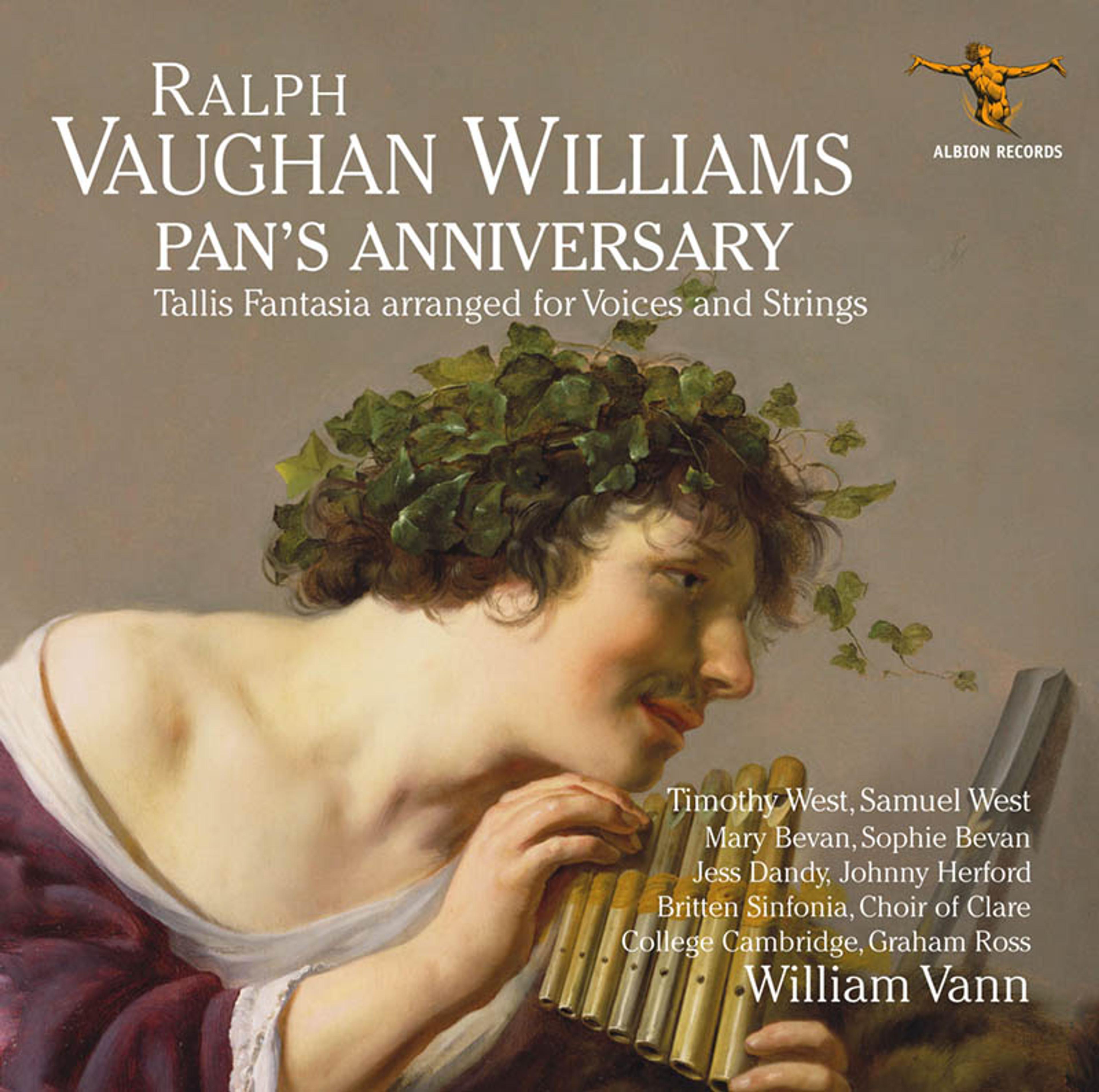
Discography




Askonas Holt welcomes contralto Jess Dandy
Askonas Holt is delighted to welcome British contralto Jess Dandy to its roster for general management.
Jess has already performed with the Orchestre révolutionnaire et romantique, English Concert, Florilegium, BBC National Orchestra of Wales, The Academy of Ancient Music, The Dunedin Consort, BBC Symphony Orchestra, and Les Arts Florissants; collaborating with conductors including Sir John Eliot Gardiner, Harry Bicket, Trevor Pinnock, John Butt, William Christie and Kristian Bezuidenhout.
Highlights this season include her international opera debut as Orphée in Orphée et Eurydice with the Opéra Comique and Raphaël Pichon, Bach’s Weihnachtsoratorium with the Mozarteumorchester Salzburg and her Wigmore Hall debut.
Jess's manager, Nathan Morrison, caught up with her for this introductory interview…
Tell us a bit about your path towards becoming a singer?
My path towards becoming a singer has been short and simple. My attempts to complicate it, however – “shouldn’t we go this way?”, “are you sure about that?”, “my feet hurt” – have been multifarious and labyrinthine. As Hildegard puts it, ‘the path is short, but the way is deep.’
As a child, I was privileged that domestically, even though there was no formal training, music was fundamental to various members of my family – talismanic for them in terms of the way they negotiated adversity in their own lives, and I was deeply aware from a very young age of the solace that could be found in musical experiences. My grandfather, for example, was seriously ill for the whole of his adult life, but a major part of his coping strategy was to remain a fervent, and life-long member of his local male voice choir – we would sing hymns together at home, his tone imbued with a rich kindness, caramel and honeyed. Time concertinas when I think of it, I’m at once adult and child, and I can hear his voice in the air; it is deeply embedded in me, and forms part of my own voice now, an inheritance inseparable from who I am today. There was something guileless and pure about singing those hymns in my grandparents’ dining room, but it also established a keen awareness in me of the existential crux of music-making, extracting its essence, an early connection to the source of my own song.
As well as deeply formative relationships with various instrumental teachers, I also had the absolute luck of studying with a singing teacher from the age of eight to twelve who had performed at Glyndebourne and Bayreuth, and yet had somehow ended up teaching singing at my school in Cumbria. He didn't infantilise or compromise his approach to teaching, despite my age. I remember him introducing me to the concept of a messa di voce: with an imaginary paint brush, he traced its contours along the piano to apex and back again. My understanding was embryonic at best, but seeds are planted at various stages in life, and their eventual flourishing does not depend on immediate comprehension. They become lodged somehow in one’s system and they break the surface without warning at the oddest of times. Though at that stage I was a treble, I also remember him quite obstinately making me sing repertoire that I protested was too low for me, in order to ground the voice. He would always tell me to bring the bell-like facility of my head tones down into the lower passaggio. I remember hating him for it; I was addicted to the literal high of that luminescent pop in the vocal stratosphere, but my current self is hugely grateful for that early tethering.
With a few exceptions, most of my adolescent musical personality was cultivated within the context of one-to-one teaching – instilling in me a willingness to soul search and introspect from a very young age. Music was my own, sacrosanct space where I could experiment and explore away from the freneticism of everyday life, letting my voice grow on its own unimpeded. Sport, the school’s primary focus, gave me an early taste of discipline, drive and focus, which I’ve been able to apply to my singing now that it is robust enough to benefit from it.
It was not until I joined the National Youth Choir of Great Britain at the age of sixteen, and two years later became a choral scholar at Trinity College, Cambridge under Stephen Layton, that I began to formalise my musicianship communally. At this stage, I was singing as a soprano. The first piece we did in the choir rehearsal was “Jesu, meine Freude”. I didn't sing a note: I had absolutely no idea of what was going on, but I did know that this was transcendental music, and an important moment in my life. I felt bathed in sound; it was like nothing I’d ever experienced, and I knew there and then that I wanted to become fluent in that language. I knew it was another mother tongue, dormant somewhere in my system. Waking it up, finding fluency, has been one of the greatest experiences of my life.
[embed]https://www.youtube.com/watch?v=_exaQ9P-Wss[/embed]
The Contralto voice is rare animal; can you give us some insight into the challenges/rewards?
I think the path towards my being a contralto was laid far earlier than I was aware. I continued to have singing lessons as a teenager, and, over a period of a few months, I quite distinctly remember my voice breaking. This is not something women talk about really, and it is definitely a biological reality. We could do well to formalise our approach to this transition, if only from a psychological point of view. It is almost like falling out of a state of grace: the voice you revel in with absolute impunity as a child now begins to elude you, shapeshifting almost hourly, and it takes a lot of conscious thought to steer it safely back into harbour. My singing teacher negotiated it very well: she explained to me what was happening, but I really did not like it. The new, lower warmth felt almost grimy to me, like a chasm I didn’t want to fall into, and I resisted it, I tried to hold onto what my voice sounded like ‘pre-Fall’, clinging onto a purity no longer authentic to me. From a gender point of view, it exposed my adolescent received idea of femininity, and how that manifested itself musically. My burgeoning vocal identity, this lower, richer, more womb orientated sound world was irreconcilable with my own world view and my place in it as a woman-in-training. When I first went to Trinity College, I still revelled in those bell-like head tones, which remain very much a part of my singing – they should be a part of everybody’s singing – but I’ve now learnt how to integrate all of these aspects. I did not see this new, richer quality as a gift to be integrated; I saw it as an antagonist, a threat to be suppressed. I had a really interesting singing teacher in my second year called Ulla Blom, who had taught Karterina Karneus, and is a formidable proponent of the Swedish Italian school. Her approach was quite controversially muscular, but her unremitting commitment to bodily involvement in singing was just what I needed as a counterpoint to my own persistent ideas of purity contingent upon disembodiment. The formalised ‘sliding downwards’ started in earnest on my Year Abroad in Lyon, which formed part of my degree course as a linguist. I took “Ach, ich fühl’s” to my first singing lesson with Brian Parsons at the CNSM de Lyon, and he immediately said, “you’re not a soprano”. It was at once confusing and liberating. I really built a sense of musical personhood in that year – moving to an entirely different place, a tabula rasa, the necessity to reach out to people, to start working as a musician. Brian and I had the space and time to explore a whole new rabbit warren of music: my first experiences of Bach alto repertoire; book after book of lieder; anthology after anthology of mezzo-soprano arias. And Brian was the first person to suggest I might be a contralto, telling me to listen to Helen Watts sing ‘Sapphische Ode’ as a point of reference. By the time I went back to Cambridge for my final year, my soprano days were long gone, and I began my postgraduate studies at Guildhall School of Music & Drama shortly afterwards as a mezzo-soprano.
It was, however, a bumpy ride to becoming a contralto: it is not a fashionable term and it is not necessarily fashionable for people of my age either, even more so when I was starting music college at the age of twenty-two. I have a naturally dark timbre, and that aroused suspicion, and I have to confess that I went along for a time with the production line of the young lyric mezzo and her numerous trouser roles, both vocally brightening and physically disappearing to fit what I thought was ‘appropriate’ or ‘employable’. It was not until I had a major tongue root spasm and had to go for an emergency appointment with a laryngeal physiotherapist that I woke up to how far away from myself I had strayed. I was told in no uncertain terms that what I had been doing was harmful, and that my lower, darker voice was not the result of a depressed tongue, but was rather my authentic, healthy voice.
When I started studying with Gary Coward in 2015, I had never really consciously used chest voice before, and, to be perfectly honest, I was scared of it. Even though I'd been singing contralto and mezzo-soprano repertoire since 2010, if I saw anything approaching a middle C or lower, I got the fear; I still had a soprano mentality in that respect. With Gary, I knew I wanted to build a technique for life; I wasn't interested in short term validation. Over the course of a year, I began a kind of hermit life of over practising – six to eight hours of scales a day, no repertoire for over six months, with two hours of yoga every evening. It was possibly not my best plan, and its intensity was not approved by Gary, I hasten to add, but I am glad I explored my voice to such an extent and on such a foundational level without any need to compromise. It was intoxicating to rediscover my instincts, and to discover where my voice truly wanted to go. About six months in, Gary suggested we think about the term contralto, formalising my new-found tessitura. Returning to Bach arias, beginning to sing Mahler and Berlioz, it was like getting into a warm bath. It was like loosening the belt after a lovely meal; there was wonderful expansiveness to it. Finally, I had the space to luxuriate, the horizontality of those long lines fit my voice like a glove. My voice was gaseous in that respect; it filled the space that was given to it, and it felt like such a relief, a literal decompression, like I'd come home. I do think there needs to be more imagination in education in that respect: singing Cherubino for every young mezzo is perhaps not the right thing; respecting people's individuality and revelling in that, in the inexhaustible diversity of our musical personalities and just how fertile that diversity can be – I think that is something to celebrate rather than fear.
Who is your vocal idol?
I have so many – it is very difficult to single out anyone in particular. I think, in terms of becoming more attuned to my body and embracing its power as an instrument, hearing Shirley Verrett sing “O Don fatale” for the first time was pivotal. She was singing from the ‘pelvis’, let's say… there was something tidal about it, an oceanic force that, as a woman, is such an amazing thing to wield, but something that perhaps we are not always encouraged to do, because it is messy and it is powerful. My teacher, Gary Coward, would tell me in the early days of our working relationship that you have to go through chaos to get to order, and the sheer primal force of Verrett’s approach helped me over the precipice into the generative rawness of my own instrument, as opposed to the false, reactionary security of a ‘controlled’, risk-averse sound. She helped me to grow down into my own voice, embrace its earthiness, and revel in what it could do to my body. In terms of sensuality and sexuality, her Dalila also opened me up to the potential of the voice as an invocatory tool, as well as an expressive one.
In my transition from mezzo-soprano to contralto, it was also very important for me to start listening more deliberately to contraltos: to get to know my tribe, if you like (!), to enjoy a vocal empathy with them, to have the satisfaction of recognition – “that person’s voice likes to sit where my voice likes to sit”. Previously, listening to singers had been a translation exercise, but meeting artists like Helen Watts, Maureen Forrester, Kathleen Ferrier, of course, and Marian Anderson, was a homecoming. Marian Anderson particularly resonated with me in terms of her spiritual, almost enstatic approach. If Shirley Verrett encouraged me to revel in the materiality, the sheer physicality of singing, Marian Anderson showed me the awesome power of self-sublimation. Her singing transformed her into a kind of crucible – contained, concentrated, a distillation of what it means to be alive. She was a vessel of spirit really, a containment of something beyond all of our comprehension, clarity and mystery as one in the same. There can be a propensity to encourage performers to come out of their shell, to orientate themselves outwards, to be demonstrative and dramatic. That’s absolutely fine, but it is not always why we sing, and it can actually result in a kind of self-estrangement if it isn’t appropriate to the repertoire or to the singer. To experience somebody whose artistry was so incisive and transformative, but in such an internal, deep way, gave me permission to excavate that aspect of myself. Quotidian human perception is so interesting: we notice the changing of the leaves, but we don't notice the movement of the spheres, yet the forces at work in the movement of the spheres are so much greater than the changing of the leaves. I believe that Marian Anderson was tapping into consciousness at the level of the changing of the spheres, and that her voice was a manifestation of something enormous, yet ordinarily imperceptible to us. She was able to momentarily unveil the cosmic vastness of what is always there, and it is an existential privilege to witness that with her. I'm really interested in that as a quality in a singer. On a more superficial level, her technical facility is just astonishing: purring at the bottom of her voice and seamlessly taking head tones down into chest voice, integrating it beautifully into the overall mechanism. There are times, however, where a disintegrated chest voice can be used, albeit sparingly (!), as an expressive tool. I'll never forget the first time that I heard Helen Watts singing “But who may abide”, and let’s say the “refiner’s fire” did what it said on the tin. The gear changes in and out of chest voice were almost confrontationally unapologetic, and she outright rejects the maxim of “never louder than lovely” on the final phrase where she does the opposite of Anderson and brazenly brings her chest voice up far higher than we’d ever expect in the female voice. I love this idea of subverting gender roles, playing at the limits, crossing or even dissolving boundaries. There’s something so deliciously transgressive about it – I don’t want to fetichise it, but I do enjoy the odd rogue foray off the beaten track! People seem to find women using chest voice almost titillating – I'm sure there's a study to be written on it…
What inspires you as a performing artist?
I spent lockdown with my parents in my childhood home in Cumbria, and I regressed in a way – I enjoyed being a musical hermit for a while, following my nose, leafing through scores almost at random. Equally, I was very fortunate to have a lot of contact with various musicians online, and we started to explore the possibilities of virtual music-making. These projects were so helpful as surrogates, but I cannot emphasise enough just how bodily and proprioceptive the act of music-making is. There are so many things intrinsic to it that we take for granted. For example, when two people are in the same room, they begin to synchronise: their breath starts to regulate; they start to mimic each other’s body language; and, on a deeper level, mirror neurons begin to fire up. This delicate and intricate web of push and pull, ebb and flow, stimulus and response, is lost in the latency issues of most standard virtual software. The obstinacy of a click-track and the sheer unmusicality of singing along to somebody else’s version of something is a pale imitation of music-making. It is through spontaneous open-minded conversation, sensitive inference, elasticity, malleability of phrasing, that you can explore music with another person or people to create a new form, which lives and breathes of its own accord.
When you are deprived of the thing you love, it gives you the time and space and deep sadness to examine it from almost every angle. In ‘Lady Chatterley’s Lover’ of all things, Lady Chatterley contests the love is blind maxim. She advocates that the opposite is true: love is clinical in its hyperattention; you know everything about your lover, the body of your lover, the personality of your lover, the inflection of their voice, their myriad tells in myriad situations. You become an expert reader of them. I love music, and I have been given the time and space to examine it with my whole being. In some ways, I have become more fluent as a musician during lockdown, but it is only now, with the return of some live performances, that I am able to perceive this progress. I also spent a lot of time during lockdown outside in nature, a lot of time walking. I was reading a book by an author called Tristan Gooley called ‘How to Read Water’, and I honed in on a chapter advocating sound maps. I went for a walk the next day, and the world was transformed for me. Through this auditory prism, time and space shifted – I could hear water running in the next valley; it was so simple, and yet, I had a new superpower. As I started to explore with my ears, the more I found various places that inadvertently had amazing acoustics, but very much did not look like concert halls. A concrete tunnel under the A591, implausibly called Nannypie Lane, a former quarry now aptly known as Cathedral Cave, a very specific spot in a valley with one of the strangest echoes I have ever heard. I liked the idea of having conversations with these places – “a song sleeps in all things”, as Eichendorff says, and I wanted to coax awake these slumbering songs. Really, my voice does not exist until it disturbs the air and reverberates off the walls of a space – in other words, it does not exist without its dialogue with space and spaces. There is a Sami tradition called yoiking in which one would sing the cave, not to the cave, not about the cave, but rather, one would bring the cave into being through song – I think that is a fascinating mission statement. Another really interesting tenet of these spaces is the readiness of visitors – most of them non-musicians – to start experimenting with their own voices, and the visceral joy they derive from the results. I think it is amazing that we clearly have an inbuilt acoustic sensitivity regardless of training. We are all attuned to the acoustical properties of place. Having no one to sing with throughout lockdown also intensified the satisfaction of singing with spaces, and recording Hildegard’s Sequence for the Holy Spirit at dawn in Nannypie Lane Tunnel was a strange, liquid experience of imbibing sound, a kind of musical recycling; aspects of my own voice re-joined me in a cumulative over-layering of my own sound, which left me pummelled and disorientated, but deeply enlivened.
[embed]https://www.youtube.com/watch?v=ytXQYcsBBkI[/embed]
Share This Article
Latest News
- 27 November 2026
Julie Røssland debuts with the Norwegian Opera and Ballet
Read full article - 27 November 2026
Miguel Sepúlveda and Elisabeth Brauß debut with the Tampere Philharmonic Orchestra
Read full article - 27 November 2026
Lilit Davtyan debuts at the Bayerische Staatsoper
Read full article - 27 November 2026
Yannick Nézet-Séguin tours Europe and the US with the Chamber Orchestra of Europe
Read full article